Tropical Storm Karen was a weak tropical storm that impacted the Lesser Antilles, Virgin Islands, and Puerto Rico in September 2019. The twelfth tropical cyclone and eleventh named storm of the 2019 Atlantic hurricane season, it originated from a tropical wave which entered the tropical Atlantic on September 14. The wave quickly organized as it neared the Windward Islands on September 20, becoming a tropical depression just two days later. The depression strengthened into Tropical Storm Karen later that day, as it moved across the southern Windward Islands. By 18:00 UTC that day, Karen had reached its first peak intensity with 1-minute sustained winds of 45 mph (72 km/h) and a minimum pressure of 1,003 millibars (29.6 inHg). Karen weakened back to a tropical depression at 06:00 UTC on September 23. However, just 12 hours later, Karen re-intensified into a tropical storm. It then entered the central Atlantic, early the next day. Karen began to degrade on September 27, when it weakened into a tropical depression, due to strong wind shear. The system subsequently degenerated into a surface trough later that day.
Karen caused significant flooding and widespread power outages in Trinidad and Tobago. Damage on the island of Tobago reached $3.54 million (2019 USD). Flooding and power outages also occurred in Puerto Rico where roughly 29,000 customers lost electricity. Only minimal impacts were reported in Venezuela, the remainder of the Windward Islands, and the British Virgin Islands. (Full article...)
Image 2
Daniel Santos (February 5, 1916 – November 27, 1992) was a Puerto Rican singer and composer of boleros, and an overall performer of multiple Caribbean music genres, including guaracha, plena and rumba. Over the course of his career he adopted several names created by the public and became known as "El Jefe" and "El Inquieto Anacobero". (Full article...)
Image 3
"Pero Dile" (transl. "But Tell Them") is a song written and performed by American singer Víctor Manuelle on his sixth studio album, Inconfundible (1999). The song's production was handled by Sergio George, while the arrangement was done by Ramón Sanchez. It was released as the album's lead single in 1999 by Sony Discos. One of the album's salsa songs, it narrate the singer telling his ex to tell other people that he was a bad lover and admits to being at fault.
"A Puro Dolor" is a song recorded by Puerto Rican band Son by Four. It was written by Omar Alfanno and released as the first single of the second studio album of the band in 2000. Two versions of the track were produced by Oscar Llord for the album; one as a salsa and the other as a ballad. The ballad version was arranged by Alejandro Jaén.
The song reached number-one on Billboard Top Latin Songs chart, and became the longest running chart topper of its history, spending 20 weeks at the top; this record was broken five years later by Colombian singer Shakira with "La Tortura" which spent 25 weeks at number-one. "A Puro Dolor" also reached the Billboard 100; this led to the recording of an English-language version of the track "Purest of Pain", which was also charted in the United States. (Full article...)
The album was well received by critics who complimented George's production and Anthony's youthful voice. Anthony received two awards for "Best New Artists" at the Billboard Latin Music Awards and the Lo Nuestro Awards. The album produced three singles: "Hasta Que Te Conocí", "Palabras del Alma", and "Si Tú No Te Fueras", all of which charted on the Billboard Hot Latin Songs chart. As of 2002, Otra Nota has sold over 300,000 copies. (Full article...)
Cosme began his career in the International Wrestling Association (IWA) based in Puerto Rico, under the ring name Ricky Banderas. While performing in the company, he won the IWA World Heavyweight Championship five times and held minor championships on fifteen separate occasions, before leaving the company in 2006. On March 12, 2006, he debuted in Lucha Libre AAA Worldwide (AAA), a promotion based in Mexico, as a character named Muerte Cibernética and was involved in an angle where this character was "killed". In November 2006, Cosme was featured in the tapings of the Wrestling Society X television series, where he was the second and last wrestler to win the WSX Championship. (Full article...)
Tricontinental magazine cover depicting a female member of the Young Lords Party (YLP) The women of the Young Lords, originally integrated into the organization from a women's auxiliary group in Chicago, Illinois, made significant contributions to the organization. Despite their substantial involvement in its activities, they initially faced marginalization. Often assigned menial tasks, they were unable to pursue leadership positions. As a result, they published a position paper on women in the organization's newspaper discussing the expectations placed of women of color. In early 1970, the women of the Young Lords organized an informal "women's caucus" to discuss their grievances with the organization's gender dynamics.
Despite opposition from some male members of the organization, a group of women issued an ultimatum to its Central Committee in May 1970. As a result of this ultimatum, the Young Lords modified their Thirteen-Point Program, created a men's caucus focused on domestic skills and emotional vulnerability, and promoted of Denise Oliver-Velez to the organization's Central Committee. Following the resignation of José "Cha Cha" Jiménez, the leader of the Chicago Young Lords, Angie Navedo became the chapter's leader. Meanwhile, Gloria Fontanez joined the Central Committee in 1970, spearheading the Young Lords Party's (YLP's) expansion into Puerto Rico in early 1971 and eventually becoming its sole leader as well. (Full article...)
Image 14
"No Quiero Na' Regala'o" (I Don't Want a Gift) is a song by Puerto Rican salsa band El Gran Combo de Puerto Rico from their studio album De Punta a Punta (1971). Written by Perín Vasquez, it deals with the singer not wanting love merely out of pity.
The song was covered by Puerto Rican singer Gilberto Santa Rosa on his tenth studio album Esencia (1996). Production of Santa Rosa's version was co-handled by the artist and José Lugo. The cover version was positively reviewed by critics, who called it catchy and danceable. In the United States, "No Quiero Na' Regala'o" reached number 10 on the BillboardHot Latin Songs chart and topped the Tropical Airplay chart, spending three weeks in the position. (Full article...)
Image 15
The 1985 Puerto Rico floods produced showers and thunderstorms across the island and the deadliest single landslide on record in North America, that killed at least 130 people in the Mameyes neighborhood of barrio Portugués Urbano in Ponce. The floods were the result of a westward-moving tropical wave that emerged off the coast of Africa on September 29. The system moved into the Caribbean Sea on October 5 and produced heavy rains across Puerto Rico, peaking at 31.67 in (804 mm) in Toro Negro State Forest. Two stations broke their 24-hour rainfall records set in 1899. The rains caused severe flooding in the southern half of Puerto Rico, which isolated towns, washed out roads, and caused rivers to exceed their banks. In addition to the deadly landslide in Mameyes, the floods washed out a bridge in Santa Isabel that killed several people. The storm system caused about $125 million in damage and 180 deaths, which prompted a presidential disaster declaration. The tropical wave later spawned Tropical Storm Isabel. (Full article...)
The port was originally overseen by the Port of the Americas Authority (Spanish: Autoridad del Puerto de las Américas) a defunct government-owned corporation of Puerto Rico. As of December 2012, it was overseen by the newly created Autoridad del Puerto de Ponce. The Authority reported that when completed, the new port will have a storage capacity of 2.2 MillionTEUs. The Authority also reported that the port handled an estimated 504,044 short tons of cargo in 2007, and projected it to handle over 1.5 million in 2012. (Full article...)
... that the Cuatro is the national instrument of Puerto Rico?
... that the state of Florida was discovered by Puerto Rico's first governor, Don Juan Ponce de León?
... that in 1950, the authorities in Puerto Rico placed a US$10,000 bounty on the head of outlaw Antonio Correa Cotto , either dead or alive, which was a first in the crime annals of the island?..[1]
... that Puerto Rico enjoys one of the planet's highest productivity ratios? That value-added in manufacturing on the island totals $10.02 for every dollar of production worker wages, more than double the mainland US average of $4.64?[2]
... that the bronze statue of Juan Ponce de León in the center of the Plaza de San Juan was made from British cannons captured during Sir Ralph Abercromby's attack in 1797?
... that Faith Evans, is first woman to be named U.S. Marshal?
Image 2Flag flown by Fidel Vélez and his men during the "Intentona de Yauco" revolt. (from History of Puerto Rico)
Image 3An 1899, caricature by Louis Dalrymple (1866–1905), showing Uncle Sam harshly lecturing four black children labelled Philippines, Hawaii, Puerto Rico and Cuba (from History of Puerto Rico)
Image 4US and Puerto Rico flags on a building in Puerto Rico (from Culture of Puerto Rico)
Image 5'La escuelo del Maestro Cordero' by Puerto Rican artist Francisco Oller. (from Culture of Puerto Rico)
Image 8The original Lares revolutionary flag. The first "Puerto Rican Flag" used in the unsuccessful Grito de Lares (Lares Uprising). (from History of Puerto Rico)
Image 101876 indemnity bond paid as compensation to former Puerto-Rico owners of freed slaves (from History of Puerto Rico)
Image 11Royal Cédula of Graces, 1815, which granted legal entry of some foreigners to Puerto Rico. (from History of Puerto Rico)
Image 12"El desastre es la colonia" (the disaster is the colony), words seen on light meter six months after Hurricane Maria (from Culture of Puerto Rico)
Image 17Los Reyes Magos painted by Hipolito Marte Martinez, "In Puerto Rico, Melchior is always represented with dark skin" (from Culture of Puerto Rico)
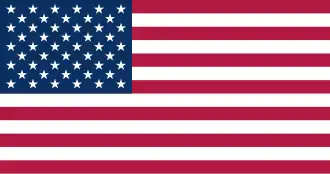
Image 18The 45-star flag, used by the United States during the invasion of Puerto Rico, was also the official flag of Puerto Rico from 1899 to 1908. (from History of Puerto Rico)
Image 19Sugar cane workers resting at the noon hour, Rio Piedras. Photograph by Jack Delano, a photographer for the Farm Security Administration. Ca. 1941. (from History of Puerto Rico)
Atrocities are committed in the name of terrorism, but also in the name to combat terrorism.
”
— Former P.R. Secretary of State Ferdinand Mercado, on the commemoration of the September 11 attacks, in a September 11, 2007 interview with Primera Hora.
On Wikipedia, anyone can edit. So if you're interested in Puerto Rico and its related subjects and articles, feel free to add and edit current content or start a new article. After all, the Wikipedia community encourages all readers and users to be bold in updating pages. If you're unsure on where to start, you can choose any of the open tasks listed below. The Puerto Rico WikiProject thanks you!




.jpg)
.jpg)


.svg.png)

.jpg)


.png)
.jpg)
.jpg)

.svg.png)
.jpg)


_1.083_JUAN_PONCE_DE_LE%C3%93N.jpg)

.svg.png)
.svg.png)