During the 1970s through the late 1980s, Cuba intervened in numerous conflicts in support of anti-colonial and Marxist governments or movements across Africa, Latin America, and the Middle East. According to a CIA declassified report, Cuba had received $33 billion in Soviet aid by 1984. Following the dissolution of the Soviet Union, Cuba faced a severe economic downturn in the 1990s, known as the Special Period. In 2008, Castro retired after 49 years; Raúl Castro was elected his successor. Raúl retired as president of the Council of State in 2018, and Miguel Díaz-Canel was elected president by the National Assembly following parliamentary elections. Raúl retired as First Secretary of the Communist Party in 2021, and Díaz-Canel was elected thereafter, becoming Cuba's first leader to have been born after the Cuban Revolution.
Cuba has one of the world's few planned economies, and its economy is dominated by tourism and the exports of skilled labor, sugar, tobacco, and coffee. Cuba has historically—before and during communist rule—performed better than other countries in Latin America and the Caribbean on several socioeconomic indicators, such as literacy, infant mortality, and life expectancy. According to a 2012 study, Cuba is the only country in the world to meet the conditions of sustainable development put forth by the WWF. Cuba has a universal health care system that provides free medical treatment to all Cuban citizens, although challenges include low salaries for doctors, poor facilities, poor provision of equipment, and the frequent absence of essential drugs. (Full article...)
Image 14A 1736 colonial map by Herman Moll of the West Indies and Mexico, together comprising "New Spain", with Cuba visible in the center. (from History of Cuba)
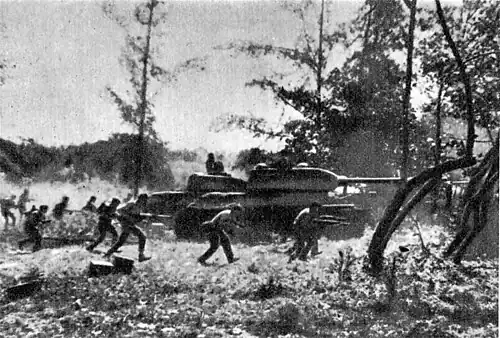
Image 16Cuban PT-76 tank crew on routine security duties in Angola (from History of Cuba)
Image 17Protests against the visit of soviet diplomat Anastas Mikoyan, dispersed by a policeman firing his gun. (February 5, 1960) (from History of Cuba)
Image 34Depiction of an engagement between Cuban rebels and Spanish Royalists during the Ten Years' War (1868–78) (from History of Cuba)
Image 35Rebel leaders engaged in extensive propaganda to get the U.S. to intervene, as shown in this cartoon in an American magazine. Columbia (the American people) reaches out to help oppressed Cuba in 1897 while Uncle Sam (the U.S. government) is blind to the crisis and will not use its powerful guns to help. Judge magazine, 6 February 1897. (from History of Cuba)
... that after his movement's victory in the Cuban Revolution, television broadcasts showed Camilo Cienfuegos freeing parrots from birdcages, declaring that the birds had "a right to liberty"?
... that Indonesian diplomat Linggawaty Hakim assisted the Bahamas government in determining its maritime border with Cuba?
... that Bob Barrabee studied tobacco farming in Cuba and played in the NFL in the same year?
... that Cuba's Girardinus fish may have evolved into different species because the island's rivers are often interrupted by waterfalls or vanish underground?
Recognized content -
Entries here consist of Good and Featured articles, which meet a core set of high editorial standards.
In December 1971, the freighters Leyla Express and Johnny Express were seized by Cuban gunboats. The Leyla Express was stopped in international waters off the Cuban coast on December 5; the Johnny Express was intercepted by gunboats near the island of Little Inagua in the Bahamas ten days later. Some of the crew of the Johnny Express, including the captain, were injured when the gunboats fired on their vessel. The freighters both carried Panamanianflags of convenience, but belonged to the Bahama Lines corporation, based in Miami. The company was run by four brothers, Cuban exiles who had previously been involved in activities directed against the Cuban government of Fidel Castro. Cuba stated that both vessels were being used by the United States Central Intelligence Agency (CIA) to transport weapons, explosives, and personnel to Cuba, and described the vessels as being engaged in piracy. Cuba had suspected the involvement of one of Bahama Lines's ships in shelling the Cuban village of Samá, on the northern coast of Oriente Province, a few months previously; several civilians had died in the attack. The US government of Richard Nixon and the Bahama Lines denied the accusations.
Cuba released the crew of both ships to Panamanian custody, but announced that José Villa, the captain of the Johnny Express, had confessed to being an agent of the CIA, and would face trial. The US asked the Panamanian government of Omar Torrijos to negotiate his release. Rómulo Escobar Bethancourt and Manuel Noriega traveled to Cuba, where they negotiated Villa's release into Panamanian custody, in return for which criminal charges were brought against Villa in Panama, though he was released without being convicted. The success of the negotiations undertaken by Noriega were later used by him to bargain with the US government. As a consequence of the incident, the US ordered all its naval and air forces in the region to go to the aid of any ships coming under attack from Cuban vessels. A Panamanian mission which investigated the incident concluded, based on the ships' logs, that the vessels had in fact brought insurgent forces to Cuban territory, and that the Cuban government's accusations on that count were accurate. (Full article...)
He is widely considered as Cuba's best folk singer and arguably one of Latin America's greatest singer-songwriters. Known for his intellectual, highly eloquent and symbolic lyrics, his songs are iconic elements of Latin American left-leaning popular culture. Many of his songs have become classics in Latin American music, such as "Ojalá", "Playa Girón", "Unicornio", "Sueño con Serpientes", "Vamos a andar," and "La maza". Among his other well-known songs are political anthems like "Fusil contra fusil" and "Canción del Elegido", and poetic melodies like "A donde van" and "Noche sin fin y mar". He has released over 20 albums. (Full article...)
I began singing ‘Dos gardenias’ (by Isolina Carrillo) and Ry Cooder recorded it. It was that way that I joined, without being in the project, because I was not part of the Buenavista (Social Club) project. I recorded four songs. Afterwards, came the tours, the Grammy. I did not know what the Grammy was, and I was told it is an award. I liked it a lot. I am still here, singing, and I will continue to sing as long as I have strength.
Wikipedia's maxim is that anyone can edit. If you are interested in Cuba and have useful information that would form a new article or would enhance an existing article, please feel free to take part. Here are some tasks you can do to help with WikiProject Cuba:
Latin America countries: Argentina • Brazil • Colombia • Ecuador • Peru • Uruguay • Venezuela
Caribbean: Dominican Republic • Puerto Rico
Central America: El Salvador • Guatemala • Mexico
North America: Canada • United States
History and Society:
African diaspora • Latinos • Mesoamerica
Recognized content
Extended content
This is a list of recognized content, updated weekly by JL-Bot (talk · contribs) (typically on Saturdays). There is no need to edit the list yourself. If an article is missing from the list, make sure it is tagged (e.g. {{WikiProject Cuba}}) or categorized correctly and wait for the next update. See WP:RECOG for configuration options.




_(cropped).jpg)


_(cropped).jpg)


 Cuba topics


 Commons
 Wikibooks
 Wikidata
 Wikinews
 Wikiquote
 Wikisource
 Wikispecies
 Wikiversity
 Wikivoyage
 Wiktionary
 List of all portals





 Random portal
 WikiProject Portals