Portal:Poland

Welcome to the Poland Portal — Witaj w Portalu o Polsce


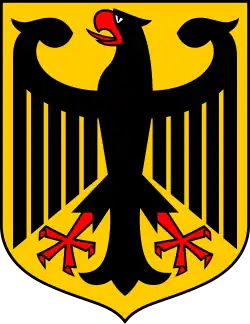
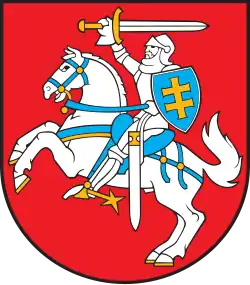
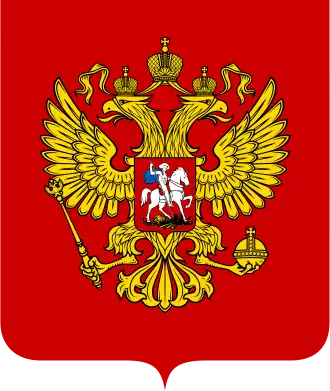
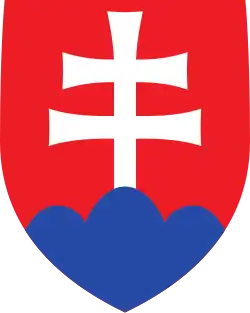
Poland is a country in Central Europe, bordered by Germany to the west, the Czech Republic to the southwest, Slovakia to the south, Ukraine and Belarus to the east, Lithuania to the northeast, and the Baltic Sea and Russia's Kaliningrad Oblast to the north. It is an ancient nation whose history as a state began near the middle of the 10th century. Its golden age occurred in the 16th century when it united with the Grand Duchy of Lithuania to form the Polish–Lithuanian Commonwealth. During the following century, the strengthening of the gentry and internal disorders weakened the nation. In a series of agreements in the late 18th century, Russia, Prussia and Austria partitioned Poland amongst themselves. It regained independence as the Second Polish Republic in the aftermath of World War I only to lose it again when it was occupied by Nazi Germany and the Soviet Union in World War II. The nation lost over six million citizens in the war, following which it emerged as the communist Polish People's Republic under strong Soviet influence within the Eastern Bloc. A westward border shift followed by forced population transfers after the war turned a once multiethnic country into a mostly homogeneous nation state. Labor turmoil in 1980 led to the formation of the independent trade union called Solidarity (Solidarność) that over time became a political force which by 1990 had swept parliamentary elections and the presidency. A shock therapy program during the early 1990s enabled the country to transform its economy into one of the most robust in Central Europe. With its transformation to a democratic, market-oriented country completed, Poland joined NATO in 1999 and the European Union in 2004, but has experienced a constitutional crisis and democratic backsliding since 2015.
From Polish history –

Selected biography –

Selected location –

Did you know –

- ... that the Wawel Dragon statue (pictured) in Kraków breathes fire?
- ... that the Treaty of Buda enabled Louis I of Hungary to become king of Poland because his uncle had no legitimate sons, but had to be followed by the Treaty of Kassa (Košice) because Louis himself had no sons?
- ... that Jerzy Żuławski's Trylogia Księżycowa ("Lunar Trilogy"), published between 1901 and 1911, was a major milestone in the history of science fiction and fantasy in Poland?
- ... that the inmates of Poniatowa concentration camp dug their own graves as fake air-raid trenches?
Poland now
Recent events
.jpg)
- Poland at the 2026 Winter Olympics:


- On 14 February, Kacper Tomasiak (pictured) won a bronze medal in large-hill ski jumping, adding to his silver medal won on a normal hill five days earlier.
- On 13 February, Vladimir Semirunniy won a silver medal in speed skating.
- On 18 November, Włodzimierz Czarzasty of the New Left party was elected Marshal (speaker) of the Sejm (lower house of parliament).
- On 21 October, American Eric Lu won the International Chopin Piano Competition held in Warsaw.
Ongoing
Holidays and observances in February 2026
(statutory public holidays in bold)

- Fat Thursday (Polish doughnuts pictured), 12 February
- Valentine's Day, 14 February
Selected image –
.jpg)
- 10 gulden
- 20 gulden
- 50 gulden
- 100 gulden
- 500 gulden
Subcategories

You can help!
|
|
 |
Topics
Related portals
.svg.png)
|

|
|
|
|
|

|
| Belarus | Czech Republic | Germany | Lithuania | Russia | Slovakia | Ukraine |

|

|

|

|
| Europe | Catholicism | Communism | European Union |
Associated Wikimedia
The following Wikimedia Foundation sister projects provide more on this subject:
-
 Commons
Free media repository -
 Wikibooks
Free textbooks and manuals -
 Wikidata
Free knowledge base -
 Wikinews
Free-content news -
 Wikiquote
Collection of quotations -
 Wikisource
Free-content library -
 Wikiversity
Free learning tools -
 Wikivoyage
Free travel guide -
 Wiktionary
Dictionary and thesaurus
Wikipedias in the languages of Poland
|
Kaszëbskô Wikipedijô Kashubian Wikipedia |
|
Polska Wikipedia Polish Wikipedia |
|
Ślůnsko Wikipedyjo Silesian Wikipedia |

|
Wymysiöeryś Wikipedyj Vilamovian Wikipedia Incubator |
Беларуская • Česky • Deutsch • Հայերեն • Lietuvių • Romani • Русиньскый • Русский • Slovenčina • Українська • ייִדיש
-
 List of all portals
 -

-

-

-

-

-
-

-

-

-
 Random portal
 -
 WikiProject Portals