Portal:Pan-Africanism

IntroductionWelcome to the Pan-Africanism portal!
Bienvenue sur le portail panafricanisme!  .jpg) Pan-Africanism is a movement that aims to encourage and strengthen bonds of solidarity between all indigenous peoples of Africa along with all peoples of African descent. The belief extends beyond continental Africans with a substantial support base among the African diaspora in the Americas and Europe. Based on the belief that unity is vital to economic, social, and political progress, it aims to unify and uplift people of African ancestry. It was in the twentieth century that Pan-Africanism emerged as a distinct political movement initially formed and led by people from the Diaspora (people of African heritage living outside of the Continent). In 1900, the Trinindadian barrister – Henry Williams – organized the first Pan-African conference to "protest stealing of lands in the colonies, racial discrimination and deal with other issues of interest to Blacks". (Full article...) Selected article African nationalism is an umbrella term which refers to a group of political ideologies, mainly within Sub-Saharan Africa, which are based on the idea of national self-determination and the creation of nation states. Selected biography
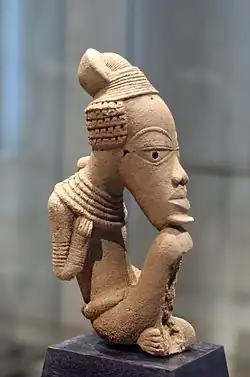
Issa Laye Thiaw (born 1943 at Sangué, Thies region of Senegal, died 10 September 2017, Senegal was a Senegalese historian, theologian, and author on Serer religion, Serer tradition and history. Selected history The Arab slave trade was the intersection of slavery and trade in the Arab world, mainly in Western Asia, North Africa, East Africa and Europe. This barter occurred chiefly between the medieval era and the early 20th century. The trade was conducted through slave markets in these areas, with the slaves captured mostly from Africa's interior and Southern Europe. Selected culture 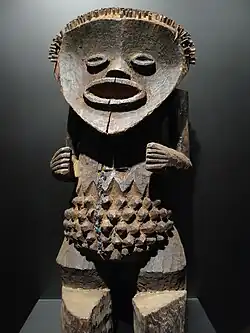 African art describes the modern and historical paintings, sculptures, installations, and other visual culture from native or indigenous Africans and the African continent. The definition may also include the art of the native African, African diasporas, such as African American, Caribbean and other American art. Despite this diversity, there are some unifying artistic themes when considering the totality of the visual culture from the continent of Africa. Masquerade, metalwork, sculpture, architecture, fiber art, and dance are important art forms across Africa and may be included in the study of African art. The term "African art" does not usually include the art of the North African areas along the Mediterranean coast, as such areas had long been part of different traditions. For more than a millennium, the art of such areas had formed part of Islamic art, although with many particular characteristics. The art of Ethiopia, with a long Christian tradition, is also different from that of most of Africa, where traditional African religion (with Islam in the north) was dominant until relatively recently. African art includes ancient art, Muslim art of North and West Africa, the Christian art of East Africa, and the ritualistic art of these and other regions. Most African sculpture was historically in wood and other natural materials that have not survived from earlier than, at most, a few centuries ago; older pottery figures can be found from a number of areas. Masks are important elements in the art of many peoples, along with human figures, often highly stylized. There is a vast variety of styles, often varying within the same context of origin depending on the use of the object, but wide regional trends are apparent; sculpture is most common among "groups of settled cultivators in the areas drained by the Niger and Congo rivers" in West Africa. Direct images of deities are relatively infrequent, but masks in particular are or were often made for religious ceremonies; today many are made for tourists as "airport art". Since the late 19th century there has been an increasing amount of African art in Western collections, the finest pieces of which are now prominently displayed. African mask art has had an important influence on European Modernist art, which was inspired by their lack of concern for naturalistic depiction. West African cultures developed bronze casting for reliefs, like the famous Benin Bronzes, to decorate palaces and for highly naturalistic royal heads from around the Bini town of Benin City, Edo State, in terracotta as well as metal, from the 12th–14th centuries. Akan goldweights are a form of small metal sculptures produced over the period 1400–1900; some apparently represent proverbs, contributing a narrative element rare in African sculpture; and royal regalia included impressive gold sculptured elements. Many West African figures are used in religious rituals and are often coated with materials placed on them for ceremonial offerings. The Mande-speaking peoples of the same region make pieces from wood with broad, flat surfaces and arms and legs shaped like cylinders. In Central Africa, however, the main distinguishing characteristics include heart-shaped faces that are curved inward and display patterns of circles and dots. Selected images
OrganisationsAll-African People's Revolutionary Party · African Society for Cultural Relations with Independent Africa · African Unification Front · African Union · African Queens and Women Cultural Leaders Network · Conseil de l'Entente · Convention People's Party · East African Community · Economic Freedom Fighters · Global Afrikan Congress · International African Service Bureau · International League for Darker People · Organisation of African Unity · Pan African Association · Pan-African Congress · Pan Africanist Congress of Azania · Rassemblement Démocratique Africain · Pan Africa Chemistry Network · Pan African Federation of Accountants · Pan-African Freedom Movement for East and Central Africa · Sahara and Sahel Observatory · UNIA-ACL · ZANU–PF
See also
Category:Pan-Africanist organizations & Category:Pan-Africanist political parties
Festivals_(cropped)_1.jpg) Photo by Helinä Rautavaara (1977) Publications
Films and TVAudios and videosDid you know...that Henry V. Plummer was a chaplain with the US Army Buffalo Soldiers, while his son H. Vinton Plummer was a leader in Marcus Garvey's secret service and militia?
Selected quotesIn addressing imperialism at a Salisbury (Southern Rhodesia) meeting held on 9 April 1962, the former President of Zimbabwe Robert Mugabe delivered the following speech:
Pan-Africanism topics
Categories Select [►] to view subcategories
Pan-Africanism Pan-Africanism by continent Pan-Africanism by country Pan-Africanists Afrocentrism Kwanzaa Nkrumaism Novels by Ayi Kwei Armah Pan-Africanist organizations Pan-African media companies Pan-Africanism portal Sankarism Things you can do
Other things you can do...
Related portalsAssociated WikimediaThe following Wikimedia Foundation sister projects provide more on this subject:
Discover Wikipedia using portals
| |||||||||||||||||||||||||||||||||||||||||||||||||||||||||||


.jpg)



.svg.png)